
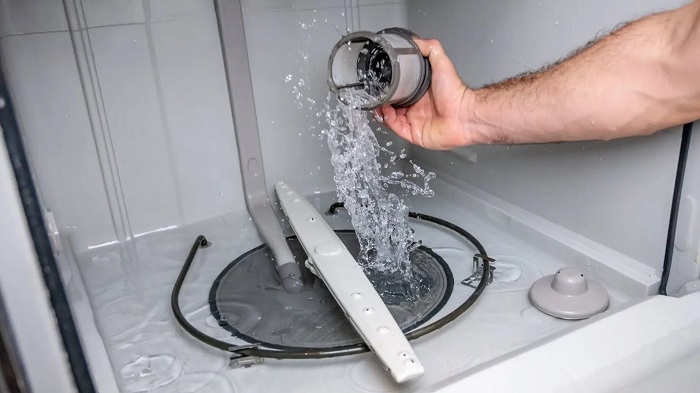
Poor water drainage in a dishwasher is easy to diagnose: after the program ends, a puddle remains in the bottom, dishes come out streaky, and sometimes the machine stops the cycle and displays an error message. This symptom should not be ignored: stagnant water accelerates wear and tear, causes unpleasant odors, and can lead to leaks.
Most often, the cause is related to clogs, improper installation of the drain hose, or faulty drainage system components. Below is a clear diagnostic flow chart, from simple to complex, to resolve the problem quickly and safely with appliance repair dishwasher.
How to troubleshoot: step-by-step inspection
- Turn off the power and shut off the water. For safety, begin any action by unplugging the power cord.
- Drain the water from the dishwasher tray. Use a sponge or scoop to access the filters and reduce the risk of overflow.
- Rinse the filters. Remove the filter assembly and rinse under hot water. If there is a greasy residue, use a soft brush and degreaser. Replace the filters exactly according to the mounting marks.
- Clean the filter seat and water intake. Inspect the niche under the filters: remove debris and check for broken pieces. If the check valve is visible, ensure it moves freely and is not jammed.
- Check the drain hose. Move the machine away from the appliance and ensure the hose is not pinched or kinked. Check for proper routing and the presence of the “high loop” (lift) according to the instructions for your model.
- Check the siphon and drain. Disconnect the hose from the siphon/tee and check for obstructions. Clean the siphon if necessary. If water drains slowly in the sink, there is likely a general blockage in the pipe.
- Run a drain test. After assembly, run a short program/drain. Listen to the pump: a steady sound and rapid water drainage are normal; a humming sound without any effect indicates a blockage or pump malfunction.
- Check the pump for debris. If the impeller is accessible through the service hatch/filter area, carefully remove any foreign objects. Do not use force: the impellers are fragile.
- Diagnose the sensors and module. If mechanical blockages are ruled out, but the drain is unstable, there may be a problem with the level sensor, wiring, or circuit board. In this situation, it’s wise to contact a dishwasher repair service to avoid damage and assembly errors.
Prevention: Remove large food debris before loading, rinse filters every 1-2 weeks, run a hot cycle with dishwasher cleaner once a month, and ensure the drain hose isn’t kinked after installation.
Signs of a malfunction: How to tell if the drain isn’t working properly
Focus on the recurrence of symptoms: a one-time failure can be caused by overloading or clogging with food debris, while regular symptoms almost always indicate a clogged filter/hose, a faulty pump, check valve, or water level sensors.
Main symptoms of drainage problems
- Water remains at the bottom after the program ends or reappears after a few minutes (backflow from (sewage).
- The program freezes during the draining phase, and the cycle takes noticeably longer than usual.
- An unusual sound is heard during the draining process: a humming sound without pumping, an “empty” buzzing sound, or periodic attempts to turn on the pump.
- Dishes are dirty or streaky because water is not being removed and recirculated.
- An unpleasant odor from the chamber, especially after inactivity: water is stagnant in the tray/filters.
- Debris (crumbs, bones, glass) is visible at the bottom, which is not drained with the water.
- An error is displayed (if present) related to the drain/water level: the machine stops the cycle and requires attention.
- Water drains slowly: the pump can be heard running, but the level does not drop well, which often indicates a partial blockage or a pinched pipe. hose.
Summary: If water remains in the chamber, the cycle is delayed, odors appear, errors or unusual sounds occur during pumping, and the drain does not work properly. If these symptoms recur regularly, it is necessary to check the filters, drain hose, impeller, and pump, as well as the correct connection to the sewer and the operation of the check valve.